KISLEV FIRSTFRUITS

Get ready to celebrate the next Firstfruits as we begin the ninth month of the Hebrew calendar on November 26th.  This coming month is known as “Kislev” and is usually the darkness month of the year because the days are shortest toward the end of the month during the Winter Solstice.  However, this is the month that usually celebrates the “Festival of Lights,” most commonly known today as Hanukkah, which reminds us of God’s light, love, and faithfulness.

When Jesus spoke again to the people, he said, “I am the light of the world. Whoever follows me will never walk in darkness, but will have the light of life”(John 8:12).

It is not a coincidence that this month is associated with the tribe of Benjamin, who’s name means, “son of light,” and the only son of Jacob born in the Promised Land.  Benjamin’s birth reveals both sorrow and joy:  Sorrow that his mother died while giving birth;  Joy because this tribes prophetic destiny was to become “light-bearers” for the King of kings.

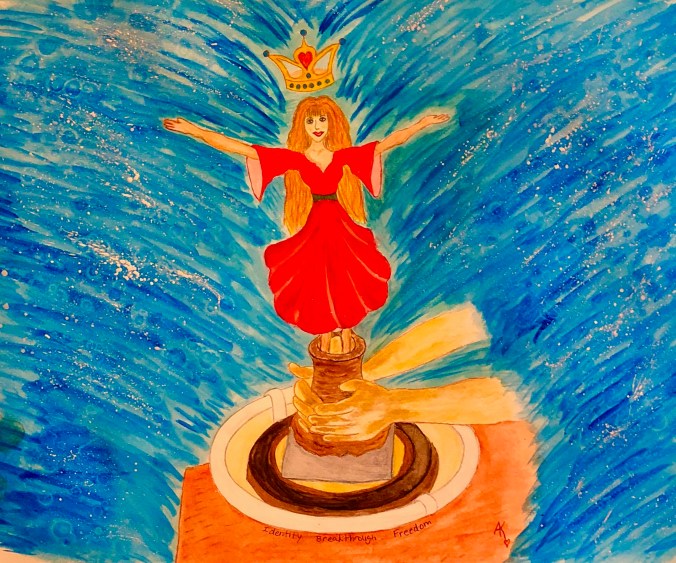
I asked several people to pick a Hebrew month and draw or paint a picture representing its meaning for this year’s Hebrew Covenant Calendar Journal.  Our youngest participant was a 6 year old named Zachariah, who drew the following picture after his mother told him what the month was all about.

Through this picture, Zach captured the character trait of Benjamin as a wolf, but notice the rays of light radiating out from this wolf, surrounded by a rainbow and the “right hand” shown in the picture on the bottom right.  These symbols all represent God’s heart for this month:  “MY PROMISE FOREVER:  I SHALL BEAR FORTH SONS OF LIGHT!”

new doc 2018-11-21 14.39.46_1

Moses prophesied over the tribe of Benjamin these words:

“Benjamin is a ravenous wolf; in the morning he devours the prey, in the evening he divides the plunder” (Gen. 49:27)

The prophetic words Jacob spoke over Benjamin show two sides of him:  A ravenous wolf  and one who distributes provision.  Both of these are diametrically opposed which show us that in Benjamin’s youth (character not developed), he only thinks about what can satisfy his own cravings and desires and will stop nothing to obtain them.  But as Benjamin matures, this selfish side dies through trials and tests, and a servant emerges to be “God’s right hand.”

Saul of Tarsish, later known as Paul the disciple of Christ, exemplifies this dual identity.  Saul was a Benjamite, who was killing Christians and feeling pretty proud of his achievements until He encountered Christ.

“I say then, has God cast away His people? Certainly not! For I (Saul/Paul) also am an Israelite, of the seed of Abraham, of the tribe of Benjamin” (Rom. 11:1).

Saul’s conversion begins suddenly when a light from heaven shone all around him:

“Then Saul, still breathing threats and murder against the disciples of the Lord, went to the high priest and asked letters from him to the synagogues of Damascus, so that if he found any who were of the Way, whether men or women, he might bring them bound to Jerusalem

As he journeyed he came near Damascus, and suddenly a light shone around him from heaven. Then he fell to the ground, and heard a voice saying to him, “Saul, Saul, why are you persecuting Me?”

And he said, “Who are You, Lord?”

Then the Lord said, “I am Jesus, whom you are persecuting. It is hard for you to kick against the goads” (Acts 9:1-5).

Saul was blind for 3 days, until the Lord’s light of truth caused the scales to come off his eyes and his sight was then returned.  Saul’s name means “Inquired of God.”  But through this conversion, his name was changed to Paul, meaning “little.”  I believe this change reflected the “mature” side prophesied of Benjamin as we see Paul humbled (little) before the Lord after his conversion.

Being recognized as a “son of light” comes through a process of learning to trust God completely, which produces security, peace, and restfulness in our soul.  

“TRUST in the Lord with all your heart, and lean not on your own understanding.  In all your ways acknowledge Him, and He shall direct your path” (Prov. 3:5,6).

This month, get excited like a child, anticipating that there is something good God is orchestrating that will be a gift to those who put their trust in the Lord.

During Kislev, I am reminded of the younger generation who take the torch for Jesus today. How can we come alongside of them and help them fulfill their destiny to establish the kingdom of heaven here on earth?  Are WE revealing the light of Jesus to this younger generation, to the world in darkness?

“But if we walk in the light, as he is in the light, we have fellowship with one another, and the blood of Jesus, his Son, purifies us from all sin” (1 John 1:7).

Be on the lookout this month for the voices of the younger generation making an impact in this nation.

“You are the light of the world. A city that is set on a hill cannot be hidden” (Matt. 5:14).

And take a moment and consider:  Am I a reflection of His light with my words, my heart, and my service?

“In Him was life, and the life was the light of men” (John 1:4).While you have the light, believe in the light, that you may become sons of light.” These things Jesus spoke, and departed, and was hidden from them” (John 12:36).


CHESHVAN FIRSTFRUITS

We will be heading into our next Firstfruits on Monday, October 28th, which signifies the beginning of the Hebrew month of Cheshvan.  Cheshvan is the eighth month of the Hebrew Covenant Calendar, and is a month that signifies “new beginnings.”

Cheshvan immediately follows the “fall feasts” and is known as “bitter Cheshvan” because it marks the cold and rainy season in Israel.  

Cheshvan’s name stems from the word “flood.” Looking back through biblical history, the flood during the days of Noah began on the 17thof Cheshvan and ended the following year on the 27thof Cheshvan.  This month is regarded by many as a time of judgment and hardship.  But for those “walking in obedience” to the Lord, it can be a month of resting in God’s protection, and entering into new doors of opportunity.

When Noah opened up the door and left the ark, he was on a new mission. In the “ark of obedience,” Noah and his family were spared from God’s judgment. But after the door opened, Noah was  given a new job to multiply and fill the earth.

Cheshvan is the eighth month which signifies new beginnings or revelation that God is releasing in this second month of the harvest season. 

This month is also associated with the tribe of Manasseh; which was one of sons of Joseph. Joseph’s sons were grafted in to Jacob/Israel’s Covenant blessing:

“Bless the lads; Let my name be named upon them.  And the name of my fathers Abraham and Isaac; and let them grow into a multitude in the midst of the earth.” (Gen. 48:16) 

Manasseh means, “one who makes to forget, one who forgets the toil.”  The character of Manasseh was to forgive and not carry a grudge.  In doing so, Manasseh could reach the full potential of their calling.  This tribe shows us the character of forgiveness to the point of forgetting the wrong, and it is through this character that the Lord uses His people to minister to thousands and to bring healing to the nations.

The prophetic blessing given to Joseph (which would now go to his two sons Manasseh and Ephraim) was the crowning best:

“Joseph is a fruitful bough, a fruitful bough by a well; His branches run over the wall.” 

In Genesis 49:22-26 and Deut. 33:13-17, God declares that the sons of Joseph would have hidden resources, rich heritage with God’s favor and blessing upon the land given with rain and produce.  In addition, these two tribes would push the peoples to the ends of the earth.  This rich heritage is what we inherit through Christ, and have seen manifest as Christians are now all over the world.

In studying Manasseh, there was a pivotal time in their history in which there were no men to carry on the inheritance of the tribe according to the laws that had been set forth (Numbers 27:1-11). Five women from the tribe of Manasseh dared to believe God for a new thing.  They came together and set forth a petition to Moses to allow women to take possession of their inheritance if there weren’t any male heirs so that their tribe could continue to thrive.

Moses took their request to the Lord, and the Lord made an amendment to the law and granted their request.  I think this story is so relevant to women stepping through doors of leadership like “Deborah.”

There is a surge of women arising and positioned to lead in what God is calling forth in this hour in areas that have been oppressed or blocked through religious and cultural strongholds. Women will be granted access to places the “traditions of men” wouldn’t let them go to before.  God alone (not women’s manipulation or self -preservation responses), will break forth like a flood as God open up the gates.

God is definitely tearing down the barriers and limitations that have kept women from the ability to take their position for the King.  It will not look like the feminist movement that diminishes the vitality of men and their significant roles.  Women that God is positioning to lead will be known for their wisdom, humility, and unbridled love for the Lord who honor the men in their roles as well.

Gender, status, or title will NOT be the deciding factor of who can lead or not up ahead:  It will be determined by whom God has chosen to anoint in this hour: male, female, young, old, rich, poor, title or no title….He will raise them up, and He will anoint and appoint.  I believe the Church at large will be surprised whom God is raising up out of “no-where.”  The “hidden” remnant will bear much fruit in this hour as it did for Joseph.

In the Old Testament, we read one hero from the Tribe of Manasseh named Gideon, a “mighty man of valor. (Judges 6:12.) At the time He is “chosen” by God to do a mighty work, He was threshing wheat to hide from the Midianites who were impoverishing and oppressing the Israelites who were destroying their produce and livestock.

The Angel of Lord appeared to him. Gideon asked, “Why are all these things happening to the children of Israel?” He was wondering where the signs and wonders were of the days of His ancestors who God delivered from the Egyptian slavery.  And the Lord said to Gideon, “Go in this might of yours, and you shall save Israel from the hand of the Midianites.  Have I not sent you” (Judges 6:14)?

Gideon didn’t believe God had the right guy, because the odds were against him and he didn’t “appear” to be the best candidate. 

”O my Lord, how can I save Israel?  Indeed my clan is the weakest in Manasseh, and I am the least in my father’s house.” But the Lord replied,“Surely I will be with you, and you shall defeat the Midianites as one man.”

God is calling the Gideon’s of today to stand in His strength, not their own. He has chosen the Gideon’s to move forward in their gift and talent in His righteousness so that this nation can see His truth and glory; placing people in government, business, education, finances, arts, etc. who He has prepared for such a time as this.

When God finally convinced Gideon He was chosen, Gideon did the logical thing and gathered as many resources as he could to fight the Midianites.  The Lord instructed Gideon that he had too many resources…too many soldiers to go to battle. This was key to God’s strategy in turning the hearts of His people toward Him.  The children of Israel needed to see His sovereignty to cut to their heart and depend on the resources “flooding” forth supernaturally.

I believe the Lord is speaking very clearly today that the old season is DEAD!  When the Lord flooded the earth, there was a great death.  Death needs to happen in order to see God’s resurrection power.  The Lord said to Joshua, “MOSES IS DEAD!”  (Joshua 1:1).

I believe we are experiencing a death to the last season the church has been in.  We will have to close doors to open new ones.  We will have to let go of old ways and mindsets that aren’t producing life any longer.  We need to let go of past successes as well so we can embrace the newness of the season ahead.

Ask the Lord, “What door do I need to close so I can enter in the new door ahead?”


FEAST OF TABERNACLES

“Speak to the children of Israel, saying, “The fifteenth day of this seventh month shall be the Feast of Tabernacles for seven days to the Lord.  On the first day there shall be a holy convocation (dress rehearsal).  You shall do no customary work on it.  For seven days you shall offer an offering made by fire to the Lord.  On the eighth day you shall have a holy convocation (dress rehearsal), and you shall offer an offering made by fire to the Lord. It is a sacred assembly, and you shall do no customary work on it. (Lev. 23:33-35)”

The Feast of Tabernacles is also known as the “Feast of Ingathering,” as it is celebrated at the final gathering of the harvest season, signifying the mark of the end of the agricultural year. Whereas the Passover offering was associated with the barley harvest, and Pentecost was associated with the wheat harvest, Tabernacles was associated with the grape harvest.  Since the “blessings of the land” had been reaped for the year, the people could REST from their labors and REJOICE, which is the heart of this Feast.

“And you shall take for yourselves on the first day the [a]fruit of beautiful trees, branches of palm trees, the boughs of leafy trees, and willows of the brook; and you shall REJOICE before the Lordyour God for seven days” (Lev. 23:40).

The Feast of Tabernacles is also known as “Sukkot,” which when translated means, “Feast of Booths.” This is because the Lord commanded the children of Israel to live in temporary houses, or “tents/booths,” during the Feast so that they would remember how the Lord provided and was present with them, even in their 40 years of testing through their wilderness wanderings.

“You shall dwell in booths for seven days. All who are native Israelites shall dwell in booths, that your generations may know that I made the children of Israel dwell in booths when I brought them out of the land of Egypt: I am the Lord your God” (Lev. 23:42.43).

The “temporary tent/booth” today is symbolic of a New Covenant believer’s mortal (temporary) body, where God’s presence dwells because of the Holy Spirit deposited in us.

“Do you not know that you are the temple of God and that the Spirit of God dwell in you?” (1 Cor. 3:16).

This deposit was a guarantee UNTIL we receive our immortal (permanent) bodies.

“who (speaking of the Holy Spirit) is the guarantee of our inheritance until the redemption of the purchased possession, to the praise of His glory” (Eph. 1:14).

The Tabernacles blueprint required drink and wine offerings to be given 7 days of the Feast of Tabernacles. The drink offering was symbolized as an outpouring of the Holy Spirit (water) that prophesied of the “guarantee.” Because of Christ’ sinless sacrifice that conquered death, at God’s SET TIME, He will also swallow up death in our mortal bodies and manifest God’s glory.

“But we see Jesus, who was made a little lower than the angels, for the suffering of death crowned with glory and honor, that He, by the grace of God, might taste death for everyone” (Heb. 2:9).

The wine represented the overthrow of evil because of the wrath of God, which will produce righteousness in the earth.  A similar pattern is found in Revelations 16, as the “7 bowls of wrath” are poured out, confirming this transformation process of light overcoming darkness.

“Go and pour out the bowls of the wrath of God on the earth” (Rev. 16:1).

God warns us in Rev. 14 that those who worship the beast (Babylon (money and power and reject the Law (Way, Truth, Life of Christ), will be affected by God’s wrath:

“If anyone worships the beast and his image and receives his mark on his forehead or on his hand, he himself shall also drink of the wine of the wrath of God, which is poured out full strength into the cup of His indignation” (Rev. 14:9,10).

In addition to the offerings, at the end of every seventh year, the Lord commanded the Israelites to read the LAW each day of the Feast:

 “And Moses commanded them, saying: ‘At the end of every seven years, at the appointed time in the year of release, at the Feast of Tabernacles, when all Israel comes to appear before the Lord your God in the place which He chooses, you shall read this law before all Israel in their hearing” (Deut. 31:10,11).

By opening up the Law and reading what God spoke in His Tablets of Covenant, the hearts were reminded of God’s love and promise for each of them. 

Historically, on the first day of Tabernacles, the Israelites sang Psalm 105 when the priests poured their offerings of water and wine on the altar.  Psalm 105 is a brief history of how God redeemed the children of Israel from Pharaoh and slavery.  This kicked off the celebration.

It is interesting to note that the Feast of Tabernacles was not properly celebrated for over 900 years between Joshua and Ezra.  Butjust one week after the completion of the wall of the second temple in Jerusalem, the people gathered together for the Feast of Trumpets and stayed through the Feast of Tabernacles.  They instituted a new tradition of reading the law every year so their hearts could hear the law and respond to the Word (Rom. 3:20; 4:15; 7:7).

Tabernacles was the seventh and final Feast of the Hebraic Covenant Calendar. The number seven means blessing and completion and is so fitting that this Feast is all about celebration, joy, and “REST from works.”

The last day of Tabernacles is much like a wedding celebration, in which the bride and groom are united as ONE, and because of the Covenant made, ALL rejoice, dance, and toast to NEW BEGINNINGS.  

The Feast of Tabernacles blueprint primarily focuses on God perfecting His promise of immortality through His Son returning to the earth as our kinsmen redeemer and releasing us from the debts of sin (Book of Ruth). The 7 days of Tabernacles fulfills the laws of cleansing, which is the lawful process of purification to rid ourselves from our sinful flesh so we can receive our “immortal and glorified body (a permanent dwelling) (Num. 19; Lev. 14). After this process is complete, we can fully “tabernacle with God.”

“Not only that, but we also who have the firstfruits of the Spirit, even we ourselves groan within ourselves, eagerly waiting for the adoption, the redemption of our body (inheritance of a glorified body)” (Romans 8:23).

Until Christ returns, we celebrate like our forefathers, with great anticipation of the “promises” to come.  And like the children of Israel in the days of the Old Testament, who were known as a “Church in the wilderness” (Acts. 7:38), the “Church at large” for the past 2,000 years has living in temporary booths (bodies), with the presence of God (deposit of the Holy Spirit), hoping to enter into the Promised Land (“New Jerusalem” which is an immortal corporate body).

“For we know that if our earthly house, this TENT, is destroyed, we have a building from God, a house not made with hands, eternal in the heavens.  For in this we groan, earnestly desiring to be clothed with our habitation, which is from heaven.  For we who are in this tent groan, being burdened, not because we want to be unclothed, but further clothed, that mortality may be swallowed up by life. Now He who has prepared us for this very thing is God, who also has given us the Spirit as a guarantee” (2 Cor. 5:1-5). 

The fulfillment of this feast will mark the beginning of the New Millennium reign of Christ here on the earth. The Church at large will then be able to “REST” from the war with Satan as He is “bound” for a thousand years while Christ judges the nations and restores the earth with His righteousness.

“He laid hold of the dragon, that serpent of old, who is the Devil and Satan, and bound him for a thousand years; and cast him into the bottomless pit ad shut him up and set a seal on him, so that he should deceive the nations no more till the thousand years were finished..(Rev. 20:2,3). 

DAY OF ATONEMENT

The Day of Atonement is the next Fall Feast to honor:

“Also the tenth day of this seventh month shall be the Day of Atonement.  It shall be a holy convocation (dress rehearsal) for you; you shall afflict your souls, and offer an offering made by fire to the Lord.  And you shall do not work on that same day, for it is the Day of Atonement, to make atonement for you before the Lord your God.  For any person who is not afflicted in soul on that same day shall be cut off from his people. You shall do no manner of work it shall be a statute forever throughout your generations in all your dwellings.  It shall be to you a Sabbath of solemn rest, and you shall afflict your souls; on the ninth day of the month at evening, from evening to evening, you shall celebrate your Sabbath” (Lev. 23:27-32).

This “Appointed Day” is also known as “Yom Kippur,” which literally means “Day of Coverings.” This was the only day of the year in the Old Testament that the High Priest was able to go behind the veil in the Tabernacle and enter into the “Holy of holies” to pour the blood of a goat over the Mercy Seat to atone (cover) for the sins of the nation.

“Then he (High Priest) shall kill the goat of the sin offering, which is for the people, bring its blood inside the veil, do with that blood as he did with the blood of the bull, and sprinkle it on the mercy seat and before the mercy seat” (Lev. 16:15).

The overall purpose of this Feast was a call for a corporate (national) day of repentance with fasting, and prayer so that the MERCY of God would accept their offerings (Read Is. 58; Joel 2).  This is the ONLY fast God required each year.

“Blow the trumpet in Zion, consecrate a fast, call a sacred assembly; gather the people, sanctify the congregation, assemble the elders, gather the children who are nursing and babes; let the bridegroom go out from his chamber, and the bride from her dressing room” (Joel 2:15,16).

As the children of Israel cried out for the mercy of God to cover their shortcomings for not upholding His commandments, the High Priest would take their offerings of sacrifice to atone for their sins so that the nation could rest in the presence of the Lord and continue to receive His increase in the land.

“For I will cast out the nations before you and enlarge your borders; neither will any man covet your land when you go up to appear before the Lord your God three times in the year” (Ex. 34:24).

When the Day of Atonement ceases to be a “dress rehearsal” and goes “live,” it will be a day that judges the body of Christ and reveals the Lord’s “Firstfruits” remnant that are chosen to reign with Him in the Millennium to bring “rest” to the earth (Rev. 14:1-5).  They will then be joined together with the “dead in Christ” remnant who have risen from the graves.

“And he who overcomes, and keeps My works until the end, to him I will give power over the nations”(Rev. 2:26).

The Day of Atonement is NOT the day of judgment for the sinners who don’t know Christ as so many of us have been led to believe.  Keep in mind that all of these appointed Feasts are set dates to fulfill the purpose of the Covenant promises God made with those He chose to know Him. These “divine appointments” are not to judge those who don’t know the Lord and are ignorant of His Covenant promises.  “The books” that judge both the believers and unbelievers are opened up at the end of the Millennium, at the second resurrection.

“And I saw the dead, small and great, standing before God, and books were opened.  And another book was opened, which is the Book of Life.  And the dead were judged according to their works, by the things which were written in the books” (Rev. 20:12).

In every book of the Bible, God shows a comparison between those who are in Covenant with Him, and those who aren’t. And within each generation of those IN Covenant with Him, there is a division in the family between those who humble themselves and obey, and those who don’t.

There are well known examples in the Bible in whom we see this distinction and division between “brothers” such as Cain/Abel and Jacob/Esau (Gen. 4 and 27).  Let’s take a look at Cain and Abel’s story:

“And the Lord respected Abel and his offering, but He did not respect Cain and his offering.  And Cain was very angry, and his countenance fell.  So the Lord said to Cain, ‘Why are you angry?  And why has your countenance fallen? If you do well, will you not be accepted?  And if you do not do well, sin lies at the door.  And its desire is for you, but you should rule over it'” (Gen. 4:4-7).

As we can read in Gen. 4, God reached out to Cain to give him Fatherly advice.  God was extending His hand of mercy to give instruction to Cain to save his soul and the life of Abel.  It was Cain’s job to rule over his soul.  Cain made the choice outside of God’s advice, which caused him to kill Abel, and put him and his family in a different land.

Likewise, Esau’s anger and bitterness toward Jacob caused him to leave a legacy of people whose souls despised the children of Israel and wanted to kill them.  God then hated the actions of Esau that mimicked the devil:

“As it is written, “Jacob I have loved, but Esau I have hated”(Rom. 9:13).

In the New Testament, Christ Himself shared that many may call on the Lord, but there is a distinction made in the family of God:

“Not everyone who says to Me, ‘Lord, Lord,’ shall enter the kingdom of heaven, but he who does the will of My Father in heaven.  Many will say to Me in that day, ‘Lord, Lord, have we not prophesied in Your name, cast out demons in Your name, and done many wonders in Your name?’  And then I will declare to them, ‘I never knew you; depart from Me, you who practice lawlessness'” (Matt. 7:22,23)!

The Apostles were also used to rightly divide those Christians who were “abiding” in the Lord and those who weren’t:

“But Peter said, ‘ Ananias, why has Satan filled your heart to lie to the Holy Spirit and keep back part of the price of the land for yourself” (Acts 5:3)?

The outcome of that story is intense. Ananias, a Christian, died after being confronted with truth. The Lord separated Ananias and Sapphira from those who were birthing the Church “in one accord” with the Lord.

Even the letters to the Churches in Rev. 2 and 3 divides the “family of God” into overcomers and those who chose NOT to abide in God’s word.

“As many as I love, I rebuke and chasten.  Therefore, be zealous and repent…To him who overcomes I will grant to sit with Me on My throne, as I also overcame and sat down with My Father on His throne.” (Rev. 3:19,21).

In Lev. 23:29, concerning the Day of Atonement, God declares that “anyone who is not afflicted in soul is CUT OFF from his people.”  This does NOT mean cut off from God.  God is love, and can NEVER stop loving His people.  It also does NOT mean that believers who continue to live their lives “lawlessly” lose their salvation, for ALL have been saved by grace, which is a gift.  It DOES mean that they are cut off from the “REWARD!”

“He who despises the word will be destroyed, but he who fears the commandment will be rewarded” (Prov. 13:13).

Jesus made a way for ALL debt to be paid for breaking the law. There isn’t anyone who doesn’t need that sacrifice of atonement.  BUT, even in the New Testament, God divides the body of Christ with His Word of instruction that bears the fruit of rewards for following the Lord’s leadership, or the consequences of living our life in rebellion to God’s instruction:

“When Christ who is our life appears, then you also will appear with Him in glory.  Therefore, put to death your members which are on the earth; fornication, uncleanness, passion, evil desire, and covetousness, which is idolatry.  Because of these things the wrath of God is coming upon the sons of disobedience, in which you yourselves once walked when you lived in them.  But now you yourselves are to put off these:  anger, wrath, malice, blasphemy, filthy language out of your mouth”  (Col. 3:4-8).

The above scripture tells believers what they need to crucify in their flesh.  However, the following scripture tells believers what qualities to adopt to become an overcomer:

“Therefore, as an elect of God, holy and beloved, put on tender mercies, kindness, humility, meekness, long-suffering; bearing with one another, and forgiving one another, if anyone has a complaint against another; even as Christ forgave you, so you also must do.  But above all these things put on love, which is the bond of perfection” (Col. 3:12-14).

“And whatever you do, do it heartily, as to the Lord and not to men, knowing that from the Lord you will receive the reward of the inheritance; for you serve the Lord Christ.  But he who does wrong will be repaid for what he has done, and there is no partiality” (Col. 3:23-25).

There is NO way any of us can become “more holy” because Christ has made us so through His sacrifice and has given us a guarantee by sending us the Holy Spirit:

“who also has sealed us and given us the Spirit in our hearts as a guarantee (2 Cor. 1:22).

However, our soul (mind, will and emotions) continue to go through a sanctification process to crucify our flesh so that Christ is the Head of our soul.  We must judge our sins daily for the purpose of maintaining fellowship with Christ.  As we see through the above examples, (Cain, Esau, the Jewish leaders during Christ’s ministry, and later some Christian leaders), they rebelled against the Lord, refused His correction, and were separated from His presence.

Through Christ’s atonement as High Priest, our willingness to go through the Lord’s sanctification process, and Christ’s leadership (High King) on the earth, we can all enjoy the REST of Jubilee and the goodness of creation WITHOUT SIN.  However, one part of the family will arrive FIRST (144,000 remnant) at the “tabernacle of meeting” so they can help the rest of the family enter into HIS TABERNACLE OF REST.

“These are the ones who follow the Lamb wherever He goes.  These were redeemed from among men, being firstfruits to God and to the Lamb’ (Rev. 14:4).

We can be assured we are prepared for the Day of Atonement through our willingness to be obedient to God, honoring His commandments, serving with a broken and contrite heart, examining our unbelief with a response of repentance, and quickly forgiving offenses and injustices. (Matt. 5:9-15; Col 12-17).

“Therefore, brethren, having boldness to enter the Holiest by the blood of Jesus, by a new and living way which He consecrated for us, through the veil, that is His flesh, and having a High Priest over the house of God, let us draw near with a true heart in full assurance of faith, having our hearts sprinkled from an evil conscience and our bodies washed with pure water.  

Let us hold fast the confession of our hope without wavering, for He who promised is faithful.  And let us consider one another in order to stir up love and good works, not forsaking the assembling of ourselves together, as in the manner of some, but exhorting one another, and so much the more as you see the DAY approaching.  For if we sin willfully after we have received the knowledge of the truth, there no longer remains a sacrifice for sins, but a certain fearful expectation of judgment, and fiery indignation which will devour the adversaries…..

“Therefore, do not cast away your confidence, which has great REWARD.  For you have need of endurance, so that after you have done the will of God, you may receive the promise” (Heb. 10:19-25,35).


WHAT HAPPENS WHEN TRUMPETS GOES LIVE?

The Fall Feasts are honored and celebrated as “dress rehearsals” so our hearts are in sync with the Lord’s redemption plan.  So what happens when the Feast of Trumpets goes “live” after the sound of the trumpet?

“For the Lord Himself will descend from heaven with a shout, with the voice of an archangel, and with the trumpet of God.  And the dead in Christ will rise first (1 Thes. 4:16).

One of the most remarkable signs that will happen when this Feast is fulfilled is that the dead in Christ will rise from the grave.  Most Christians assume ALL those who are believers that have died will rise at this resurrection. But after studying scriptures, I see a different pattern to examine as we define the purpose of the two resurrections the Bible refers to:

“Blessed and holy is he who has a part in the FIRST resurrection.  Over such the SECOND death has no power, but they shall be priests of God and of Christ and shall reign with Him a thousand years” (Rev. 20:6).

The fact that the scripture indicates there is a first resurrection mandates that there is a second. God has a trumpet call for two occasions, and it is clear from Rev. 20 that the FIRST is for those who will reign with Him during the Millennium.

Let’s go back in the Bible and find the purpose of the blowing of the silver trumpets and see how it ties into these two resurrections.  In Numbers 10, God instructed Moses to make two trumpets from hammered silver: 

“Make two silver trumpets for yourself; you shall make them of hammered work; you shall use them for calling the congregation and for directing the movement of the camps.  When they blow both of these, all the congregation shall gather before you at the door of the tabernacle of meeting.  But if they blow only one, then the leaders, the heads of the divisions of Israel, shall gather to you”(Numbers 10:2-4).

Notice that when the Lord said to blow ONE trumpet, He was calling forth the HEADS (those chosen for rulership) to the door of the tabernacle of meeting. But when the two trumpets were blown, it was to gather ALL.

1 Cor. 15:51,52 shares scriptures that reveal some details of Christ’s return, and the unfolding events after the trumpet is sounded:

“In a moment, in the twinkling of an eye, at the last trumpet.  For the trumpet will sound and the dead will be raised incorruptible, and we shall be changed.”

Notice the scripture above doesn’t say trumpets.  This is because the purpose of this first resurrection is to call forth those who have been chosen as “HEADS” to reign with Christ in the Millennium.   This is also confirmed in 1 Thes. 4:16.  Both scripture references say one trumpet is blown when the dead in Christ rise.  Therefore, all those who are dead in Christ won’t arise in this first resurrection.  Those who remain dead will rise and get their glorified bodies in the second resurrection.

The bible makes it clear that God has set aside a “remnant” of 144,000 who are chosen to reign with Him in the Millennium.  This number is not actual, but symbolic, and makes it clear that ALL aren’t chosen to reign with Him.

“Then I looked, and behold, a Lamb standing on Mount Zion, and with Him one hundred and forty-four thousand, having His Father’s name written on their foreheads”(Rev. 14:1).

In John 5:28,29, Jesus did however talk about a general resurrection in which ALL who were dead, both good and evildoers, will be raised at the same time and hear His voice – NOT just those who are “dead in Christ” as the previous scriptures indicated.  

“Do not marvel at this; for the hour is coming in which ALL who are in the graves will hear His voice and come forth-those who have done good, to the resurrection of life, and those who have done evil, to the resurrection of condemnation”(John 5:28,29).

The above scripture is a picture of the SECOND resurrection that includes both believers and unbelievers.

Looking at all these scriptures, it is safe to say that the FIRST resurrection is NOT the time for the resurrection of salvation. The first resurrection marks the time Jesus is coming back, with the 144,000, to rule over the nations and to secure and establish His governmental authority in the earth.  

The issue of salvation is the purpose of the SECOND resurrection, which is explained in Rev. 20:

“And I saw the dead, small and great, standing before God, and books were opened.  And another book was opened, which is the Book of Life.  And the dead were judged according to their works, by the things which were written in the books (The law).  

And the sea gave up the dead who were in it, and Death and Hades delivered up the dead who were in them.  And they were judged, each one according to his works.  

Then Death and Hades were cast into the lake of fire.  This is the second death.  And anyone not found written in the Book of Life was cast into the lake of fire” (Rev. 20:12-15).

In taking all these scriptures into account, we can conclude that the sole purpose of the FIRST is to call forth those believers who are “rewarded” with the responsibility to reign with Christ for 1,000 years (Gen. 14:18-20; Heb. 7; Rev. 20:6).

When talking to the disciples about the rewards of leaving all to follow Him, Jesus said to the disciples that they would be repaid at the “resurrection of the just.” We can further conclude that Christ is referring to the FIRST resurrection since there is no reference of the second, and the “just” can ONLY signify believers since no one outside of faith in Christ alone are “just” (Rom. 5:1).

“And you (disciples who gave ALL) will be blessed, because they cannot repay you; for you shall be repaid at the resurrection of the just (Luke 14:14).

The reward given at the FIRST resurrection that Christ was referring to doesn’t equate to be a more “powerful or important position” in the body of Christ. That kind of thinking is what our world thinks, so it’s hard to grasp that this doesn’t mean a person chosen that is “special” or “better than” other Christians.

On the contrary, these who are rewarded are “bondservants of Christ” like our example of the Apostles Paul and Peter, who laid their lives down to serve Christ (Rom. 1:1). 

“For we do not preach ourselves, but Christ Jesus the Lord, and ourselves your bondservants for Jesus’ sake” (2Cor. 4:5).

In humility of heart, these bondservants followed His voice out of obedience to serve and faithfully steward the talents God had given them. “Bondservants” of Christ have allowed the sanctification process to crucify their flesh so that they think and act like Christ. Christ can then entrust them with His authority of rulership, which is His reward:

“For the Son of Man will come in the glory of His Father with His angels, and then He will reward each according to his works” (Matt. 16:27).

In the letters to the 7 Churches in the Book of Revelation, God first praises and acknowledges each Church for the things they were doing well. But He goes on to chastise each Church in the areas they were in error or had veered off course. In every letter the Lord addresses, He states that those who had an ear to hear would be rewarded when He returned for following His instruction.  These would be known as His “Overcomers;” the ones who embraced the sanctification process. Here is a list of rewards for those who OVERCOME:

  1. “He who has an ear, let him hear what the Spirit says to the churches.  To him who overcomes,I will give to eat from the tree of life, which is in the midst of the Paradise of God”(Rev. 2:7).
  2. “He who overcomesshall not be hurt by the second death” (Rev. 20:2:11).
  3. “He who overcomes Iwill give some of the hidden manna to eat.  And I will give him a white stone, and on the stone a new name written which no one knows except him who receives it”(Rev. 2:17).
  4. “And he who overcomes,and keeps My works until the end, to him I will give power over the nations- He shall rule them with a rod of iron; they shall be dashed to pieces like the potter’s vessels’- as I also have received from My Father; and I will give him the morning star”(Rev. 2:26-28).
  5. “He who overcomesshall be clothed in white garments, and I will not blot out his name from the Book of Life; but I will confess his name before My Father and before His angels”(Rev. 3:5).
  6. “He who overcomes,I will make him a pillar in the temple of My God, and he shall go out no more.  I will write on him the name of My God and the name of the city of My God, the NEW Jerusalem which comes down out of heaven from My God.  And I will write on him My new name”(Rev. 3:12).
  7. “To him who overcomes,I will grant to sit with Me on My throne, as I also overcame and sat down with My Father on His throne”(Rev. 3:21).

If you read the entire chapters of Rev. 2 and 3, the Lord makes a distinction between those Christians who will overcome, and those who don’t repent but continue following their own ways.  It is important to emphasize that becoming an “overcomer” has nothing to do with salvation, for the letters were addressed to ALL who were saved by grace.

“For by grace you have been saved through faith, and that not of yourselves; it is a gift of God, not of works, lest anyone should boast (Eph. 2:8,9).

But Christ does lay out the rewards for those who overcome through this sanctification process.  They enter into the FIRST resurrection, while the others continue on with the sanctification process until the SECOND resurrection.

In the Parable of the Talents in Matthew 25:14-30, Jesus shares how rewards, concerning the kingdom of heaven, have to do with rulership. The man traveling to a far country in this parable is symbolic of Jesus.  He gives to each servant (Christians) talents according to their ability to steward them until He comes back.  What does He say to the servant who gained from the talents given:

“Well done good and faithful servant; you were faithful over a few things; I will make you RULER over many things.  Enter into the joy of the Lord” (Matt. 25:21).

Rulership is a product of faith, obedience, and the sacrifice of self. No one bi-passes this sanctification process.   Even Christ couldn’t bi-pass the process that led Him to the cross.  But there are a “firstfruits” remnant whose hearts will be ready first at the time of Christ’s return.

Think about the difference between King Saul and King David.  Both kings served the Lord.  Both weren’t perfect leaders, nor perfectly obeyed the Lord’s commandments.  But Saul never fully surrendered his heart to the Lord. Instead, he was led more by his own ambitions, needs, and pride. David however was on his knees asking for the Lord’s help. David was one in whom God could entrust with His anointing of rulership.

Kingships “rewards” are a product of our choices whether we lean into God’s voice as Moses did, in obedience to His commandments, or run away and do our own thing.  Those who have learned obedience by the things they suffer will find their reward as Christ did (Heb. 5:8).

“And behold, I come quickly; and my reward is with Me, to give to every man according to his work” (Rev. 22:12).


FEAST OF TRUMPETS

“Blow the trumpet at the time of the New Moon, At the full moon, on our solemn feast day”(Psalm 81:3).

So what is the significance of the Feast of Trumpets? The literal Hebrew translation is “a memorial of blasts.” In Hebrew, this Feast is called “Yom Teruah.”  Yom means day, but Teruah doesn’t mean trumpets.  It means a shout or blast of war, alarm or joy. So literally translated, this is a Feast that is a “Day of Blasting or Shouting.”

The Feast of Trumpets is the ONLY Feast that is celebrated on Firstfruits; tying it’s meaning with “firsts” and making this day the “grand daddy” of all Firstfruits celebrations. It is believed by biblical historians that Adam was born on this day, along with Jesus as well when He was born of the Virgin Mary.  It has also been known as the “Anniversary of Creation.”

The Feast of Trumpets is celebrated in the Hebrew month of Tishri. Tishrei was originally recognized as the first month of the calendar the Hebrews followed due to these epic beginnings I just described.

However, in God’s master plan for redemption, He needed to create a separate, but intimate calendar with a people He was in covenant with so that they could become His SIGN to the nations that He was the one true God. 

This special covenant calendar was purposed to establish a pattern, purpose, timing, and union with God that set the Israelites apart from all other nations. But it also was a witness of the SIGN of the “Coming One” (Jesus), as God would use the calendar to fulfill His prophetic promises.

The Hebrew Covenant Calendar was created when God spoke to Moses and Aaron in Ex. 12:2:

“This month (Nisan) shall be your beginning of months; it shall be the first of the year to you” (Ex. 12:2). God followed this commandment with His the instructions for Passover.  Afterwards, He declared, “So this day shall be to you a memorial; and you shall keep it as a feast to the Lord throughout your generations.  You shall keep it as a feast by an everlasting ordinance”(Ex. 12:14).

Later on when the children of Israel arrived at Mt. Sinai, God gave instruction for all 7 Feasts after He sealed His Covenant with them and set them apart from all the other nations. The month of Tishri was now changed to be the seventh month in the Hebrew calendar, and the first day of the harvest (blessed) season and the month in which all the Fall Feasts were celebrated.

“Therefore all the men of Israel assembled with King Solomon at the feast in the month of Ethanim (Tishrei), which is the seventh month” (1 Kings 8:2).

There is much confusion today since the Hebrew Covenant calendar starts in the Spring, yet the Jewish civil year begins in fall on the first day of Tishri. Jews incorporate celebrating the first day of Tishri as Rosh Hashanah; translated as “the ‘head/first’ of the year,” and that is what most of our world understands this celebration to be; the Jewish New Year.  But if God said that Nisan was to be the first of the year, why are the two calendars still recognized by the Jews?

To find the answers as to why this is, we can go back to biblical history when the twelve tribes of Israel were split into two kingdoms after King Solomon’s reign (1 Kings 11).  Subsequently, the Israelites were divided into the Southern Kingdom, also known as the House of Judah; and Northern Kingdom, also known as the House of Israel (1 Kings 11). The House of Judah consisted of the two tribes, one being the tribe of Judah where the Jews originated.

After the Babylonian captivity, the House of Judah picked up the Jewish Civil year again in the first and second century because of the writings that were compiled in what is known as the “Mishnah.” Sometime between the finality of the writing of the Torah by Ezra, and the creation and codification of the Mishnah, the autumn New Year gained acceptance, and transformed into a major celebration, and the Nisan New Year was left as a marker of the months and festivals in the calendar year.

The Northern Kingdom (House of Israel), made up of the remaining ten tribes, originally kept the Ecclesiastical (Priest) year that God commanded them to follow in Ex. 12 as well…. Somewhat.  But when the House of Israel was captured by the Assyrians and scattered all over the nations, they lost their heritage, name, and blueprint of Covenant, including following the Hebrew Covenant Calendar.  They weren’t even around when the Mishnah was created and it’s writings executed as ” Jewish tradition.”

Technically, both calendars are correct, because both calendars existed.  But God commanded Moses to follow His new calendar in Exodus 12 because this new calendar was going to be used as HIS SIGN of the Redeemer, and for those wanting to recognize, honor, and be a part of the redemption process that God determined, honoring the Hebrew Covenant Calendar should have, and continue to, trump any calendar, including the Gregorian calendar our world revolves around today.

The school calendar versus Gregorian calendar is a parallel example of two calendars followed during the same time, but the Gregorian begins on January 1st, while the school calendar starts in September.  The Gregorian calendar is for all the world to follow, while the school calendar is for a specified people who are signed up for education, which is their high priority.

Because the Jews returned to including the Jewish Civil calendar into their Feast celebrations, it brought about confusion and has diminished the significance of the Hebrew Covenant Calendar that was “set apart” from the world.   Perhaps this is one reason why the Jews couldn’t see and accept Christ as the Savior when He began His ministry, because the adoption of honoring the two calendars caused them to look for a conquering king FIRST rather a sacrificial lamb.

God created the Covenant Calendar in Ex. 12 to “set apart” His Covenant promises of how Christ would become our High Priest FIRST, and our King of kings second when He returned to the earth.

“You are worthy to take the scroll, and to open its seals; For You were slain, and have redeemed us to God by Your blood out of every tribe and tongue and people and nation, and have made us kings and priests to our God; And we shall reign on the earth” (Rev. 4:9,10).

So let’s now get back to the simplicity of the purpose of the Feast of Trumpets, which is to awaken us with a blast of the trumpet.  What are we awaking to?

The trumpet has many significant meanings in the Bible.  

The trumpet was blown to signal war against the adversary (Josh. 6:5; Jer. 51:27; 1 Cor. 14:8) 

“When you go to war in your land against the enemy who oppresses you, then you shall sound an alarm with the trumpets, and you will be remembered before the Lord your God, and you will be saved from your enemies (Numbers 10:9).

It was also used to announce the king (2 Kings 9:13; 11:14).

“Then Zadok the priest took a horn of oil from the tabernacle and anointed Solomon.  And they blew the horn, and all the people said, “Long live King Solomon!” (1 Kings 1:39).

The trumpet was the sound to wake up the Church (Rev. 1:10).

“I was in the Spirit on the Lord’s Day, and I heard behind me a loud voice, as of a trumpet.”

All of these reasons (and there are many more) of why the trumpet is used are all united together on the Feast of Trumpets. This “dress rehearsal” shares it’s purpose of becoming the signal (/sign/proclamation/alarm/shout) to awaken us, to announce war against the adversary, to announce the return of the King, and to summon God’s people who are IN covenant with Him.  And when this Feast goes “LIVE,” it will mark the beginning of the Millennium.


TISHREI FIRSTFRUITS

Our next firstfruits is September 29th, celebrating the seventh month of the Hebrew covenant Calendar known as Tishrei.  This Firstfruits marks the beginning of the fall harvest season as well as the Fall Feasts.

Tishrei is a month of joyful celebration!  This month is associated with the tribe of Ephraim, who’s name means “fruitful” or “multiply.”  Ephraim was Joseph’s son who Jacob grafted into the family inheritance.  Because Joseph’s trials brought him through a difficult pathway, yet produced many blessings (becoming governor of Egypt, reunited with his family, and saving them from the famine), Joseph named his son Ephraim.

“For God has caused me to be fruitful in the land of my affliction” (Gen. 42:52). 

God’s heart and purpose in creating man is known in Gen. 1:28, which bears witness to Ephraim’s name:

“Be fruitful and multiply; fill the earth and subdue it; have dominion over the fish of the sea, over the birds of the air, and over every living thing that moves on the earth.”

It is interesting that this declaration was given first to Adam, and it continues to bear fruit thousands of years later.  Jewish historians and Rabbi’s declare that the first of Tishrei is said to be the anniversary of creation and the birthday of Adam.  It is also believed by biblical scholars that Jesus was born this month as well.  Creation, the “Adamic” race, and JESUS continue to be fruitful and multiply.

Joshua was from the tribe of Ephraim, and was one of the greatest military leaders of the bible.  He conquered ALL the kings in the Promised Land, and under his leadership, the children of Israel were fruitful and blessed.

Joshua encourages us even today as believers about how to be fruitful as he speaks to the Israelites to obey the Lord:

 Now therefore, fear the Lord, serve Him in sincerity and in truth, and put away the gods which your fathers served on the other side of the River and in Egypt. Serve the Lord! And if it seems evil to you to serve the Lord, choose for yourselves this day whom you will serve, whether the gods which your fathers served that were on the other side of the River, or the gods of the Amorites, in whose land you dwell. But as for me and my house, we will serve the Lord” (Joshua 24:14,15).

Tishrei Firstfruits is unique as it is also intersects with the Feast called the “Feast of Trumpets.”  The shofar is first blown to acknowledge the new moon and signaling the time to give the Lord a Firstfruits offering.  Firstfruits reminds us of Jehovah Jireh – the Lord who Provides,  remembering the story of how God provided a ram to sacrifice on the altar instead of Abraham’s son, Isaac:

“Then Abraham lifted up his eyes and looked, and there behind him was a ram caught in a thicket by its horns.  So Abraham went and took the ram, and offered it up for a burnt offering instead of his son.  And Abraham called the name of the place, ‘The-Lord-Will-Provide,’ as it is said to this day, “In the Moutn of the Lord it shall be provided” (Gen. 22:13,14).

The trumpet is blown next to signify the “Feast of Trumpets,” which is also known as “Day of Awakening blasts.”  This trumpet blast is a rehearsal to the body of Christ to awaken and to be ready, for the King of kings is coming.  It also signifies as a reminder that one day, when Christ returns, the Millennium will begin with the sound of the trumpet, and the transformation of the remnant to reign with Christ will commence.

” Behold, I tell you a mystery:  We shall not all sleep, but we shall all be changed – in a moment, in the twinkling of an eye, at the last trumpet.  For the trumpet will sound, and the dead will be raised incorruptible, and we shall be changed” (1 Cor. 15:51,52).

I asked my friend Athena, to paint a picture of the heart of this month.  This is what she said about the inspiration of her painting:

IMG_0602

“This watercolor painting was truly a “labor” of love.  A JOY of co-creating with Him in surrender and trust. It represents a birthing of joy in our souls as we blindly walk in obedience to our Father’s call to come with Him to the places unknown . . . to the abundant places He prepared for us before the foundations of the world. We follow His patterns holding onto the hope we have only in Him truly internalizing that “The Joy of The Lord is Our Strength”.

We dance! We sing! We celebrate what has been, what is and what will be in His will.  We blindly walk in faith worshiping our Lord for “the joy that is set before us”. (Hebrews 12:2) 

We are “flourishing” in the Father’s hands no matter what we walk through with Him.  We rejoice and celebrate in the hope that He is doing immeasurably more than all we ask think or imagine for His Glory.

 As you reflect on this painting entitled “Joy Immeasurable”, let the these scriptures sink deep in your soul and spirit bouncing up through your heart with hands lifted high in praise and gratefulness to our Heavenly Father . . . King of all creation:

“O my strength, I sing with joy your praises. O my stronghold, I sing with joy your song! O my Savior, I sing with joy the lyrics of your faithful love for me!” (Psalms‬ ‭59:17‬ ‭TPT‬‬)

“God’s glory is all around me! His wrap-around presence is all I need, for the Lord is my Savior, my hero, and my life-giving strength” (Psalm 62:7 TPT).

“But as for me, your strength shall be my song of joy. At each and every sunrise, my lyrics of your love will fill the air! For you have been my glory-fortress, a stronghold in my day of distress.” (Psalms‬ ‭59:16‬ ‭TPT‬‬)”

I love how Athena captured the heart of this month: JOY AND CELEBRATION! Praying you take time to Feast with Him!


OVERVIEW OF THE FALL FEASTS

There are three Fall Feasts that are celebrated in the seventh month of the Hebrew Covenant Calendar known as Tishrei, which begin this year on the eve of September 29th.  They are: Feast of Trumpets, the Day of Atonement, and the Feast of Tabernacles.

Jesus fulfilled the Spring Feasts when he became our “sacrificial lamb,” died and rose 3 days later, and presented Himself as the “firstfruits” offering to God.  Fifty days later, He sent the Holy Spirit so that His redemption for mankind would multiply.  Today, we continue to honor these Feasts days to remember what Jesus did on the cross.

The Fall Feasts are to be celebrated not as remembrances to honor what Christ did, but as “dress rehearsals” until Jesus returns because they have yet to be fulfilled. Since these Feasts are a prophetic blueprint of God’s redemption plan, God instructs us to honor these divine appointments and to understand their meaning so our hearts are ready for His return.

Simply defined, the Feast of Trumpets sounds the alarm that the harvest season has begun, and an awakening blast reminds us to prepare for the coming King.   Ten days later, the Day of Atonement is celebrated, anticipating the day of decision when the body of Christ is judged or rewarded to enter into the promises of Jubilee. Lastly, the Feast of Tabernacles is a joyful corporate gathering to celebrate the desired union with our Lord eternally in our glorified bodies.

We look forward to the time when these Fall Feasts go live as it will mark the beginning of the Millennium.  Jesus will then return to establish His Dominion (Kingdom) here on the earth as it is in heaven (Matt 6:6-9).  During His 1,000-year reign, Christ will utilize His “Firstfruits” remnant to establish His righteousness in the earth (Rev.5:9,10). 

Many people believe the Feasts were established as a commandment for the Israelites in the Old Testament, prior to Christ’s death and resurrection.  But the scriptures indicate that God will use the “Feasts of Tabernacles” as a SIGN to distinguish those nations in the Millennium that are with him and those who aren’t:

“And it shall come to pass that everyone who is left of all the nations which came against Jerusalem shall go up from year to year to worship the King, the Lord of hosts, and to keep theFeast of Tabernacles. And it shall be that whichever of the families of the earth do not come up to Jerusalem to worship the King, the Lord of hosts, on them there will be no rain.  If the family of Egypt will not come up and enter in, they shall have no rain; they shall receive the plague with which the Lord strikes the nations who do not come up to keep the Feast of Tabernacles. This will be the punishment of Egypt and the punishment of all the nations that do not come up to keep the Feast of Tabernacles”(Zech. 14:16-19).

In the above scripture reference, Egypt is symbolic of the world, or “anti-Christ” government and idolatry that opposes the Lord and His ways (Heb. 11:26).   When the Lord delivered the Israelites out of Egypt and brought them to Mt. Sinai, God offered the nation a “proposal of marriage” that they accepted (Ex. 19).  By honoring God’s Covenant, they were supposed to be a SIGN to the other nations of the one true God, and to show them His ways.

“Speak also to the children of Israel, saying: ‘Surely My Sabbaths (weekly and yearly Feasts “holy days”) you shall keep, for it is a SIGN between Me and you throughout your generations, that you may know that I am the Lord who sanctifies you” (Ex. 31:13).

Honoring the Feasts was God’s witness, His SIGN, that He was the one true God.  In like manner, these corporate Fall Feasts, specifically Tabernacles, will unify the nations with the Lord’s headship.

“For I will cast out the nations before you and enlarge your borders; neither will any man covet your land when you go up to appear before the Lord your God three times in the year” (Ex. 34:24).

Because the Israelites failed to keep their promise to God, it didn’t take much time until they did not reflect God’s SIGN at all. It would take God Himself to keep His promise to the nation regardless of their shortcomings.  And so….Christ came… fulfilled the Spring Feasts, redeemed the Abrahamic Covenant, and made way for the SEAL/SIGN once again.  We who receive Christ enter into this Covenant promise.

“Now to Abraham and his Seed were the promises made. He does not say, “And to seeds,” as of many, but as of one, “And to your Seed,” who is Christ” (Gal. 3:16).

The Gospels also describe the nations accepting or rejecting the Kingship of Christ in the earth during the Millennium are differentiated between the “sheep and the goats.”

“When the Son of Man comes in His glory, and all the holy angels with Him, then He will sit on the throne of His glory. All the nations will be gathered before Him, and He will separate them one from another, as a shepherd divides his sheep from the goats. And He will set the sheep on His right hand, but the goats on the left”(Matt. 25:31-33).

Christ will comes again and fulfill the pattern and purpose of the Fall Feasts very soon.  He will judge the nations with His “Firstfruits” remnant at His side and establish righteousness in the earth. The nations who are with Him will become HIS CORPORATE SEAL/SIGN in the earth.

Tabernacles is one of three Feasts that God desires for His people to gather corporately.  For those to whom God is revealing this pattern of His Holy Days to, they too have an opportunity to participate in being a witness to God’s SIGN in the earth by taking time to gather and honor this Feast.  As hearts unite to honor the Redeemer in unity of worship and prayer on HIS appointed time, God’s glory will be revealed in the earth.


Sanhedrin to Resume Animal Sacrifices in Israel

There are a lot of events happening around the world to alert us to the changes coming up ahead and the signs of the times we live in to prepare our hearts and to warn us to be prepared for Lord’s return.  But I wanted to share these two links that have captured my heart.

The first one is the event happening on September 25-27th, 2019.  The emerging “Organization of 70 Nations” are being invited to join the Sanhedrin on Mount Olives to reinstate the animal sacrifices and to adhere to the “Noahic laws.”

Our eyes should be watching what is happening with this for sure as it is a sign God warned us about before His return. If the nations join and agree to this reinstating the animal sacrifices, it will be the nations rejection of what Jesus did to redeem ALL of God’s Covenant’s for man and creation through His sacrifice on the cross.

The spirit of anti-christ is always looking for ways to nullify the work on the cross.  But most importantly for today, that spirit of anti-christ is working to gather nations to reject the cornerstone of Christianity because Christ is coming back to judge the nations.  Satan is working hard to get nations to align with his strategy through the ideology of unity, peace, and acceptance of all religions.

https://www.breakingisraelnews.com/136898/life-changing-spiritual-ascent-land-israel-jerusalem-zion-nations-9th-av/

The second link is a prophetic sign of encouragement to the remnant God has been preparing who will receive their glorified bodies and reign with Christ in the Millennium. This article seems to be SIGN that we are getting closer to that day.

Here is a lot of the article written on “Breaking Israel News” website:

“Now let me return to our walking tour through the City of David. We listened to AnaRina Heymann give an insightful and eye-opening message about the City of David on Monday morning. She shared that the City of David as it remains today is literally “outside” the Old City walls and it can speak to us to “think outside the box”.  There has been a 2800 year disconnect from this place for the Ten Tribes/Northern Kingdom/House of Israel and a 2,000-year disconnect for the Jews/Southern Kingdom/House of Judah. 

The city of David was built on a Tel close to a water source, the Gihon spring. In ancient times, there was a secret tunnel leading to this fortified pool/cistern, which was the City of David’s main water source. This water source (Gihon spring) was OUTSIDE of the walls of the city of David, so the underground tunnel allowed residents access to the water even if they were under enemy attack.J

Anna and I took the “dry route” of Hezekiah’s tunnel that led to this “outside the city walls secret cistern of life giving water.

.

When we finally came all the way through the downward descent of this tunnel, we came out into a neighborhood, and we completed our walk by ending up at the pool of Siloam:

We sat on the stone steps of the pool for some time, cooling down from the long walk in the heat of the day.

We then walked down to the end of the pool and a man approached us. Little did I know that this was truly a divine appointment orchestrated by the God of Israel!

He spoke to us. It turned out that he has been a tour guide of Jerusalem for more than 20 years and he was on a “break”. He showed us some murals that had been painted showing what the pool might have looked like when fully functioning and restored:

He explained to us that this was the pool where the people would come to “mikvah” (or immerse) before ascending to the Temple for Passover, Shavuot and Sukkot!Then the real hidden treasure and mystery was revealed to us. The tour guide pointed out some stone steps to our left. He said, “You see those stone steps? They lead right up to the Temple Mount. After the people would mikvah here at the pool of Siloam, they would then ascend these stone steps up to the Temple.”

He went on to explain that the Jews had been excavating these steps for many years and that the steps would soon be open to the public in a few months…….In the excavating of these stone steps leading up to the Temple, there seems to me to be a revealing of a deeper spiritual truth…..   Perhaps God’s hand is making a way to birth a greater vision for a restored Temple…even in the hearts of Christians throughout the Nations.

https://www.breakingisraelnews.com/136748/universal-prayer-non-jewish-sacrifice-mount-of-olives-cancel-war-gog-magog/

This find by the archeologists was revealed at God’s appointed time.  It is not a coincidence it has been hidden all these years.  God wants to establish it as His prophetic sign of what He will do up ahead when Jesus returns.  The remnant’s temple (body) will be cleansed and set free from sin and death, then go up “Jacob’s Ladder (stairs)” to stand before the throne and meet the Lord.

Something to look forward to!


ELUL FIRSTFRUITS

We are approaching our next Firstfruits on August 30th as we enter the 6th month of the Hebrew Covenant Calendar.

In the Old Testament, when Moses went back up the mountain to get the second set of Tablets of Covenant, he left on the first day of ELUL. While Moses was away for 40 days, the children of Israel humbled themselves and were hopeful God would give them a second chance.  Waiting in great anticipation for Moses to return, God used that time to allow the Israelites to gather together and examine their hearts so they were ready to honor God’s marriage proposal.

_MG_4775

I asked a friend of mine, Tammy Carroll, to paint a picture of the month of Elul to put in the Firstfruits Calendar Journal.  Here is what she wrote:

“Sometimes we go through valleys in our lives that seem long and hard but when we listen and walk with God, we can experience His promises and responses to us! I actually dreamt about this place and knew I needed to paint it.  The 3 streaks signify the Trinity, the fullness of God’s presence. If you look at it carefully, you can see a figure of a bride entering the garden signifying the covenant He has with us as His beloved. Let His promises burst out for us!”

I love the fact that Tammy captured the essence of this month: God wants to respond to us intimately and make Himself known to us in the secret places of our heart, even when we have seemingly “screwed up.”  It is His desire to come and walk alongside of us, and make Himself known so we aware He’s with us.

Many times when I am reflecting about this month, I think of time when Jesus was walking with the two men on the road to Emmaus after His resurrection.  The two men were reasoning about all the things that had just happened when the women had arrived at the Jesus’ tomb and found it open, empty, and angels declaring He was alive.

Throughout their 7 mile journey, the men’s eyes were “restrained,” as to who Jesus was as they just thought they were talking to a stranger.  When they arrived at their destination, the men invited Jesus to stay with them, so Jesus changed His plans to continue on and stayed with them.

When they all three sat down at the table to eat, Jesus took the bread, blessed it, broke it, and gave some to them.  Suddenly, their eyes were opened that Jesus was with them!

“Now it came to pass, as He sat at the table with them, that He took bread, blessed and broke it, and gave it to them.  THEN their eyes were opened and they knew Him; and HE vanished from their sight” (Luke 24:30,31).

Why I like this scriptures depicting this month is because Jesus was with them throughout the 7 miles, but they didn’t even know it.  They were frustrated, sad, and doubting everything about their own future, let alone trying to understand the present day events while sharing with Jesus all that was in their hearts.  He was there all along, walking with them in the flesh, and they had no clue!

But then, Jesus sat down and had a meal with them.  The breaking of bread was the greatest witness of the SIGN they were told to remember of His greatest sacrificial love:  “Do this in remembrance of me” (Luke 22:19).  Sometimes, we just need an ELUL moment to remember that Christ has not forsaken us in our journey.

The Hebrew letters that make the word “Elul,” aleph, lamed, vav and lamed, are an acronym for the phrase “I am my beloved and my beloved is mine” which is from the Song of Songs.

It is the month of Elul that teaches us the necessity of being willing to turn around and be vulnerable to see God face to face.  Like a loving Father, He will never turned away from us. But sometimes we cannot see Him through the fiery trials we are going through.  When we sit and “eat” with Him, we literally turn ourselves toward Him.  And this month, God wants us to see Him right where we are at in our journey.

This month is tied to the tribe of Gad, who’s name means “troop.”  Gad reminds us of the importance of gathering together with those who God has chosen to use to sharpen our “swords” so we can gain intel, strategy, and support for the season ahead.  Who are you called to lock arms with?  Now is the time to unite so you are positioned with God’s people to conquer.