“Over three centuries ago,” declared John F. Kennedy, “our forefathers in Virginia and in Massachusetts, far from home in a lonely wilderness, set aside a time of thanksgiving. On the appointed day, they gave reverent thanks for their safety, for the health of their children, for the fertility of their fields, for the love which bound them together, and for the faith which united them with their God.”
Thanksgiving has been a family favorite time to celebrate with friends and family in our nation. Many use this holiday to take time to be thankful for all the blessings God has given us.
“…in everything give thanks; for this is the will of God in Christ Jesus for you” (1 Thes. 5:18).
But where did this holiday originate from? Some would say the concept originated in England:
“A celebratory harvest festival had been part of the fabric of British society since pre-Christian times. Saxons would come together every autumn to eat supper, fashion straw dolls, and harvest corn and other products.
The Pilgrims — regardless of which “truth” you choose to believe — were simply following their own traditions and cultural norms they had grown up with, just as we do today. Festivals of communal thanksgiving became popular in the aftermath of the English Reformation. The actions of Henry VIII gave rise to the Days of Thanksgiving to celebrate perceived acts of providence. In other words, acts of God.” (Christianity.com: “What is the History of Thanksgiving”)
Most American’s believe that the Thanksgiving concept started here in America, beginning with the history of the Pilgrim’s first harvest celebration with the Wampanoag Native Americans. Although our history in celebrating Thanksgiving in America is unique to our beginnings, the concept most likely came from the Hebraic Covenant Calendar’s Feasts of the LORD. Thanksgiving mimics much of the heart of the Feast of Tabernacles. How is there a concept correlation?
Before arriving in America, the Christian pilgrims fled religious persecution in England and settled briefly in Holland in 1607. There, they found themselves living among another persecuted group, the Sephardic Jews who had exiled from Spain. It was in Holland that these Pilgrims learned the significance of the Feasts of the LORD and these “set apart” times to honor and thank God.
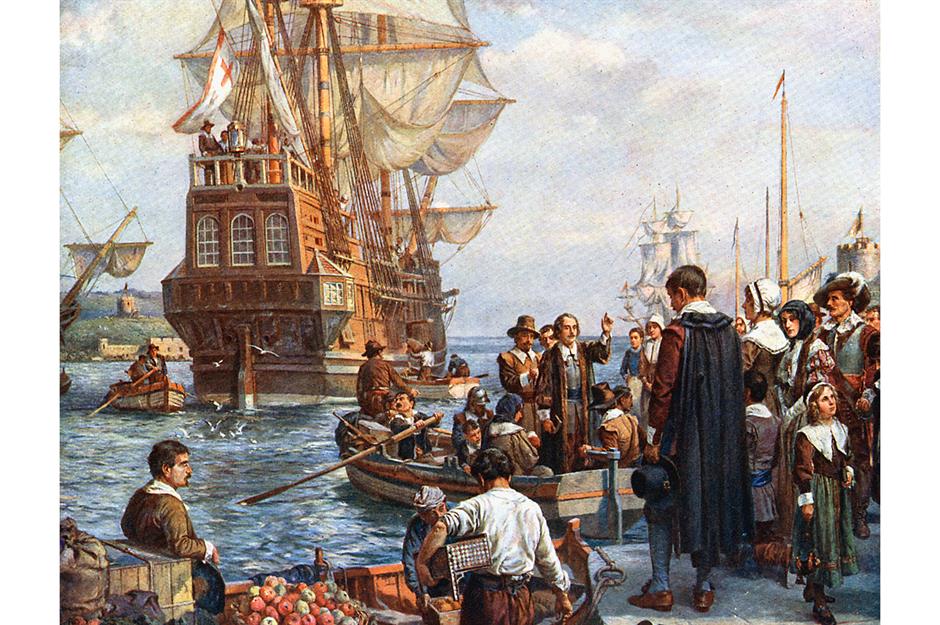
After the Pilgrims survived multiple challenges coming to America, they arrived after a plague had wiped out many of the Indians who had resided in the Plymouth area. Faced with the harsh realities of how to survive the elements, the Pilgrims and the Native American’s living near Plymouth helped one another through their trials.
The Native American’s in particular helped the Pilgrims learn how to plant corn, fish and gather berries and nuts. The Thanksgiving tradition began after their first harvest, giving thanks for the bounty of the year. A three-day celebration in 1621, with 90 Wampanoag Native Americans joining the 53 Pilgrims, was the first “American Thanksgiving.”
Over a century later, George Washington issued the first National Thanksgiving Proclamation in 1789, inviting Americans to thank God for their safety and happiness. Almost another century year later, in 1863, Abraham Lincoln formally made Thanksgiving an annual national holiday on the final Thursday of November. In 1941, FDR clarified it as the fourth Thursday in November.
The “thanksgiving” Feast of the LORD is known as the Feast of Tabernacles (Also known as The Feast of Ingathering or “SUKKOT”). It is the seventh and final feast that culminated in a joyful celebration of thanking God for the final harvest season.
There are many similarities to the Feast of Tabernacles and Thanksgiving. Both involve the harvest and joyful in-gathering. Both are celebrated in the Fall and purposed to give thanks with “family.” Both involve a lot of food and feasting. And an interesting fact is that traditional Feast of Tabernacles and Thanksgiving both involve “hodu.” Hodu is the Hebrew word for turkey, which means “to give thanks.”
Thanksgiving in America is not a “Holy Day,” but it is a day to remember how God brought the increase to those who came inspired by divine providence to birth this nation that has been blessed by God. The Mayflower Compact reads:
“...Having undertaken, for the glory of God, and advancement of the Christian faith, and honor of our King and Country, a voyage to plant the first colony in the northern parts of Virginia, do by these presents solemnly and mutually, in the presence of God, and one of another, covenant and combine our selves together into a civil body politic, for our better ordering and preservation and furtherance of the ends aforesaid; and by virtue hereof to enact, constitute, and frame such just and equal laws, ordinances, acts, constitutions and offices, from time to time, as shall be thought most meet and convenient for the general good of the Colony, unto which we promise all due submission and obedience.”
Our “nation under God” is one that was conceived to extend the freedom to honor the King as king. We have been a beacon of hope to the world in sharing the good news about the Lord. Truly, we have been blessed with abundance here to be fruitful for the building the kingdom of God here in the earth.
 Mo'Manna